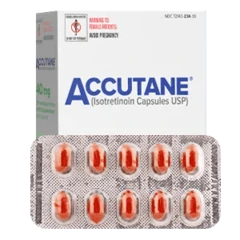
Buy Isotretinoin (Accutane)
Isotretinoin (Accutane)
$46.80
- Active ingredient: Isotretinoin
- Category: Hair & Skin Care
- Delivery time: Airmail (14-21 days) | EMS trackable (5-9 days)
- Prescription: Included
- Availability: In Stock
Isotretinoin (Accutane 10mg and 20mg) capsules are available from our licensed Malaysia pharmacy. This Vitamin A derivative shrinks oil glands to reduce sebum production, preventing severe scarring acne. It is highly effective for adults whose acne has resisted conventional therapies.
Table of contents
- Isotretinoin (Accutane) Buyer and Patient Handbook in UAE
- What is Isotretinoin (Accutane)?
- Who Should Use Isotretinoin (Accutane)?
- How Does It Work?
- Why Choose Isotretinoin (Accutane)?
- Dosage, Administration, Lifestyle and Dietary Recommendations
- Recommended Dosage
- How to Take
- Missed Dose
- Overdose or Double Dose
- Special Populations
- Lifestyle and Diet
- Precautions and Warnings
- Drug Interactions
- Potential Side Effects
- Common Side Effects
- Less Common Side Effects
- Serious Side Effects
- Who Should Avoid This Medication?
- Storage Instructions
- Isotretinoin (Accutane) Alternatives
- Frequently Asked Questions
- How long until I see results from Isotretinoin?
- Will my skin look permanently damaged after treatment?
- Can I donate blood while using this medication?
- What happens if my cholesterol levels rise during treatment?
- How long does a typical course of treatment last?
- Am I able to use moisturizing creams while on this treatment?
- Does this medication treat acne scars?
- Glossary
- Disclaimer
- How to Order Isotretinoin (Accutane) | Isotretinoin via our Online Pharmacy
- Reviews
- Write your review
Isotretinoin (Accutane) Buyer and Patient Handbook in UAE
What is Isotretinoin (Accutane)?
Isotretinoin (Accutane) is a retinoid medication primarily used in the management of severe, recalcitrant nodular Acne. This drug belongs to the retinoid class, which are Vitamin A derivatives that work by targeting several aspects of acne formation. In many regions, while the original brand name may exist, the focus is on accessing the active ingredient, Isotretinoin, which is available in pill form. Regulatory bodies around the world recognize its efficacy for conditions unresponsive to traditional antibiotic or topical therapies.
Who Should Use Isotretinoin (Accutane)?
This medication is generally reserved for specific patient profiles dealing with significant dermatological challenges.
- Adults and adolescents suffering from severe nodular acne that resists standard therapies.
- Individuals experiencing acne that leads to physical scarring or psychological distress.
- Patients whose acne demonstrates a propensity for widespread inflammation.
- It is typically administered under specialized medical supervision due to its profile.
How Does It Work?
Isotretinoin works by fundamentally altering the processes within the sebaceous glands that cause acne inflammation. The primary mechanism involves a profound reduction in the size and output of the oil-producing sebaceous glands in the skin. This dramatically decreases the amount of sebum (skin oil) available. Furthermore, it normalizes the keratinization process, which prevents the plugging of skin pores that leads to comedones (blackheads and whiteheads). By reducing sebum and normalizing skin cell shedding, the environment for Cutibacterium acnes (the bacteria associated with acne) is severely limited. For most users, once the course is complete, the long-term effects on oil production can lead to sustained improvement in skin clarity. Regarding daily activities, patients typically continue normal life, but sun exposure must be strictly minimized due to increased skin sensitivity.
Why Choose Isotretinoin (Accutane)?
The main advantage of Isotretinoin lies in its potential for producing long-term remission, often after a single course of treatment. Unlike topical treatments or systemic Antibiotics, which manage symptoms temporarily, this medication addresses the root cause-excessive oil production-at the glandular level. For those who have exhausted common options, Isotretinoin offers a path toward significant, sometimes complete, clearing of severe acne. While the original brand formulation is known, the generic medication, Isotretinoin, offers the same chemical activity and efficacy, often improving accessibility and cost-effectiveness. Some physicians may utilize it for other skin conditions characterized by abnormal keratinization, though this is generally considered an off-label application requiring in-depth consultation.
Dosage, Administration, Lifestyle and Dietary Recommendations
Recommended Dosage
Dosages for Isotretinoin are determined based on the severity of the acne and the patient’s weight, beginning with lower amounts. Common starting doses include 10mg | 20mg taken daily. The total cumulative dose over the entire course of treatment is often the goal rather than a fixed duration.
How to Take
Strict adherence to the following administration guidelines is crucial for optimal absorption and safety.
- Take the pill exactly as advised by your healthcare provider.
- Swallow the capsule whole; do not chew or crush the capsule.
- Always take the dose with a full meal to significantly enhance absorption into the body.
- Maintain consistency regarding the time of day you take the medication.
Missed Dose
If you forget a dose of Isotretinoin, take it as soon as you remember, provided it is still a reasonable distance from your next scheduled dose. If it is nearly time for the next dose, skip the forgotten dose entirely and resume your regular schedule. Do not double your dose to make up for a missed one.
Overdose or Double Dose
If you suspect you have taken significantly more than the prescribed amount, seek immediate assistance. Symptoms of a possible acute overdose are not widely documented, but significant overexposure may lead to symptoms resembling Vitamin A toxicity, such as severe headache or dermal irritation. Contact local emergency services immediately.
Special Populations
Geriatric patients typically follow the standard dosing schedule unless specific renal or hepatic function indicates adjustment. For younger individuals, dosing is strictly weight-based. Individuals with pre-existing liver or kidney impairment require careful monitoring as the body eliminates this compound through metabolic pathways that may be impaired.
Lifestyle and Diet
Because Isotretinoin affects skin health significantly, certain lifestyle modifications are necessary.
- Limit or avoid direct sun exposure due to extreme photosensitivity (risk of severe sunburn).
- Use broad-spectrum sunscreen religiously when outdoors.
- Avoid procedures that cause skin removal like waxing, dermabrasion, or laser treatments during treatment and for at least six months after stopping.
- Heavy alcohol consumption should be discussed with your clinician, particularly if liver function tests are being monitored.
Precautions and Warnings
Because Isotretinoin can affect lipid levels and liver enzymes, regular monitoring via blood tests is necessary throughout the duration of therapy. Patients must inform their provider immediately if they develop yellowing of the skin or eyes (jaundice), severe persistent headache, or changes in vision. Due to the significant risk of birth defects, female patients of childbearing potential must confirm they are not pregnant and adhere strictly to specialized pregnancy prevention programs.
Drug Interactions
Combining Isotretinoin with certain other substances can increase the risk of adverse effects, particularly irritation or toxicity.
| Drug Class | Risk | Action |
|---|---|---|
| Vitamin A Supplements | Increased toxicity | Avoid combination |
| Tetracycline Antibiotics | Increased risk of pseudotumor cerebri | Monitor closely |
| Keratolytic Agents (Topical) | Severe skin irritation | Discontinue topicals |
Potential Side Effects
Understanding the expected and severe side effects allows for timely intervention.
Common Side Effects
These effects are frequent, particularly during the initial months, as the skin adapts.
- Dryness of the lips (cheilitis)
- Dry skin, eyes, and nasal passages
- Mild temporary nosebleeds
- Slight increase in blood fats (triglycerides) and liver enzymes
Less Common Side Effects
These may occur but are less frequent among users.
- Headache or mild dizziness
- Joint or muscle aches
- Mild mood changes
- Increased sensitivity to light
Serious Side Effects
If any of the following occur, seek immediate professional medical guidance.
- Signs of elevated pressure in the skull (severe, relentless headache, blurred vision).
- Severe Depression, aggression, or suicidal thoughts (report changes in mood immediately).
- Yellowing of skin or whites of the eyes (jaundice).
- Any severe allergic reaction, such as rash combined with breathing difficulty.
Who Should Avoid This Medication?
Certain conditions significantly increase the risk associated with Isotretinoin use, making it contraindicated.
- Women who are currently pregnant or actively trying to become pregnant.
- Individuals with known severe liver or kidney impairment.
- Patients with a history of high blood lipid levels (hyperlipidemia) that is not manageable.
- Individuals taking Vitamin A supplements or other retinoids concurrently.
- Those taking tetracycline antibiotics without medical clearance.
Storage Instructions
Proper storage helps maintain the integrity of the medication until use.
- Store the pills at controlled room temperature, typically between 15°C and 25°C.
- Keep the container tightly closed to protect from moisture and humidity.
- Store away from direct light and heat sources.
- Ensure the medication is kept securely out of reach of children and pets.
Isotretinoin (Accutane) Alternatives
While Isotretinoin is reserved for the most severe cases, other treatment classes address less severe acne.
| Name | Class | Key Difference |
|---|---|---|
| Benzoyl Peroxide | Topical Oxidizer | Surface action, less systemic effect |
| Doxycycline | Systemic Antibiotic | Manages bacteria, not sebum production |
| Spironolactone (Female Only) | Anti-Androgen | Targets hormonal component of acne |
Frequently Asked Questions
How long until I see results from Isotretinoin?
The initial period often involves a temporary worsening of acne, frequently called the "flare," which usually peaks about 4 to 8 weeks into therapy before significant improvement begins.
Will my skin look permanently damaged after treatment?
If used correctly under medical guidance, Isotretinoin should not cause permanent damage; however, extremely dry skin and increased sensitivity can persist for weeks or months after discontinuation.
Can I donate blood while using this medication?
Due to its severe teratogenic potential (risk of birth defects), you must refrain from donating blood for a specified period after your final dose.
What happens if my cholesterol levels rise during treatment?
Elevated cholesterol or triglycerides are common side effects, requiring close monitoring; your clinician may temporarily adjust your ongoing dosage or recommend specific dietary changes to manage these levels.
How long does a typical course of treatment last?
A course is usually determined when a specific cumulative dose has been reached, which typically translates to four to six months of continuous daily therapy, though individual timelines vary.
Am I able to use moisturizing creams while on this treatment?
Yes, using thick, bland, fragrance-free emollients and lip balms is highly recommended to combat the profound dryness caused by the medication.
Does this medication treat acne scars?
Isotretinoin is primarily effective at treating active, severe acne and preventing new lesions, but it does not typically eliminate existing deep scarring.
Glossary
- Sebum: The oily, waxy substance naturally produced by the skin’s sebaceous glands.
- Retinoid: A class of chemical compounds derived from Vitamin A that influence cell growth and differentiation.
- Nodular Acne: A severe form of acne characterized by large, painful, solid lumps beneath the surface of the skin.
- Keratinization: The process by which skin cells mature and harden; in acne, this process becomes faulty, plugging pores.
Disclaimer
This information is provided strictly for educational purposes to offer context regarding Isotretinoin. It is intended to supplement, not replace, professional medical consultation or established treatment protocols. Efficacy and safety profiles can differ based on individual health status and specific regional formulations. Always seek the advice of a qualified healthcare professional concerning any medical condition or before starting any new treatment regimen. Our service provides access to the medication ingredient based on current understanding but does not substitute for individual clinical assessment.
How to Order Isotretinoin (Accutane) | Isotretinoin via our Online Pharmacy
Getting Isotretinoin (Accutane) | Isotretinoin on our site is simple. Just choose your dose and tablet quantity — the total price updates instantly. Click Add to Cart to add your order, then continue shopping or go to checkout. On the Payment Page, complete your purchase using our secure, encrypted system to keep your details private.
Isotretinoin (Accutane) / Isotretinoin pills are made from high-quality ingredients and tested to meet WHO and The UAE Ministry of Health (MOH) standards. Orders ship from outside UAE under international prescription rules, allowing us to provide top quality and affordable prices safely.
Reviews
This is a life-changing medication, but it's a marathon, not a sprint. The first month was tough with the 'purge'—my skin got worse before it got better. But I stuck with it. Now, 6 months in, my skin is completely clear for the first time in my adult life. My confidence is through the roof. My advice: trust the process, and don't get discouraged by the initial breakout.
Let's talk logistics. The dryness is REAL. My lips felt like the desert. The single best product was Dr. Dan's CortiBalm—nothing else came close. For my face, I ditched all other acne products and used a simple, gentle routine: La Roche-Posay gentle cleanser and CeraVe moisturizer. You have to treat your skin like a sensitive baby while on this drug. Don't try to use any other actives.
I was most worried about the nosebleeds since I live in a dry climate. A tip from a forum saved me: every single night, I put a little bit of Aquaphor on a cotton swab and gently coat the inside of my nostrils. I had exactly one nosebleed in my entire 6-month course. It's a simple trick that makes a huge difference.
The joint pain, especially in my lower back, was a noticeable side effect for me, particularly after working out. I found that taking an Omega-3 fish oil supplement daily really helped to lubricate my joints and lessen the aches. My dermatologist approved it, and it made my course much more comfortable. Don't ignore the aches; a supplement might help.
A crucial piece of advice: take your pill with a high-fat meal. My doctor stressed this. The medication is fat-soluble, so it absorbs much better with food like avocado, peanut butter, or even a glass of whole milk. Taking it on an empty stomach can make it less effective. This ensures you're getting the full benefit of your dose.
The dry eyes were a surprise side effect. I wear contacts, and they became almost unbearable. I had to switch to wearing my glasses most days and used lubricating eye drops constantly. 'Refresh' and 'Systane' were the brands that worked best for me. It's a small thing, but it makes a big difference in your daily comfort.
I had to do two full rounds of Accutane, a year apart. The first round cleared me up, but the acne came back about six months later, likely due to my PCOS. The second round, combined with starting Spironolactone, has been the long-term solution. For some people, especially with hormonal acne, Accutane might be a powerful tool, but not the final piece of the puzzle.
The mental health aspect is real, but not in the way the horror stories say. My severe acne was the cause of my depression. As my skin cleared up, my mood and self-esteem skyrocketed. I felt happier and more outgoing than I had in years. For me, the medication was the cure for my anxiety, not the cause. It gave me my life back.
Information provided by Dr. Nithya Priya Raju. Reviewed by Dr. Mohamed El Khouly