Skip to content

Atomoxetine

Atomoxetine is a selective norepinephrine reuptake inhibitor, not a stimulant. Its label indicates it for the treatment of attention deficit hyperactivity disorder. It carries a boxed warning about suicidal ideation in children and adolescents, and that warning is specific enough to be worth reading in its own terms rather than in summary.

Axepta

Attention Deficit Hyperactivity Disorder

10mg · 18mg · 25mg · 40mg

Designed to support cognitive focus to manage hyperactivity and alleviate behavioural distractions.

From$0.89/ tabletView

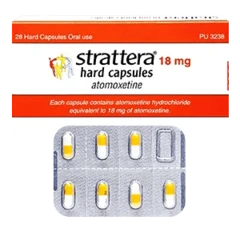
Strattera

Attention Deficit Hyperactivity Disorder

10mg · 18mg · 25mg · 40mg

Indicated to address cognitive focus to manage hyperactivity and alleviate behavioural distractions.

From$0.79/ tabletView

Key points

  • The boxed warning states that atomoxetine increased the risk of suicidal ideation in short-term studies in children or adolescents with ADHD, and that anyone considering its use in a child or adolescent must balance this risk with the clinical need.
  • The pooled analysis behind it covered 12 short-term trials of 6 to 18 weeks in over 2200 patients. The average risk of suicidal ideation was 0.4%, five patients out of 1357, against none among 851 placebo-treated patients, and no suicides occurred in these trials.
  • The label states atomoxetine is approved for ADHD in paediatric and adult patients and is not approved for major depressive disorder.
  • Drugs that raise gastric pH, including magnesium hydroxide, aluminium hydroxide and omeprazole, had no effect on atomoxetine bioavailability.

How it works

The label describes atomoxetine hydrochloride as a selective norepinephrine reuptake inhibitor. That is a different mechanism from the stimulants more commonly associated with ADHD treatment, and it is the practical reason atomoxetine is chosen for some people rather than others.

Safety specific to atomoxetine

Suicidal ideation in children and adolescents. This is the boxed warning, and it has several limbs, each of which does work:

  • Atomoxetine increased the risk of suicidal ideation in short-term studies in children or adolescents with ADHD.
  • Anyone considering its use in a child or adolescent must balance this risk with the clinical need.
  • Co-morbidities occurring with ADHD may themselves be associated with an increase in the risk of suicidal ideation or behaviour.
  • Patients who are started on therapy should be monitored closely for suicidality, meaning suicidal thinking and behaviour, for clinical worsening, and for unusual changes in behaviour.
  • Families and caregivers should be advised of the need for close observation and communication with the prescriber.

The figures behind the warning are worth stating plainly, because a summary can inflate or dismiss them. Pooled analyses of short-term placebo-controlled trials, 6 to 18 weeks, across 12 trials involving over 2200 patients, revealed a greater risk of suicidal ideation early during treatment among those receiving atomoxetine. The average risk was 0.4%, five out of 1357 patients, against none in 851 placebo-treated patients, and no suicides occurred in these trials.

Two things follow from the wording. The excess risk is described as arising early during treatment, which is why monitoring is concentrated at the start rather than spread thinly forever. And the warning asks something of the household rather than only the prescriber: advising families and caregivers is part of the warning itself.

Not approved for depression. The label states atomoxetine is approved for ADHD in paediatric and adult patients and is not approved for major depressive disorder. That boundary is worth knowing given how closely the mechanism resembles medicines used for mood.

When to seek urgent care

New or worsening suicidal thinking, clinical worsening, or unusual changes in behaviour after starting atomoxetine are what the label asks patients, families and caregivers to watch for and report to the prescriber rather than wait out.

Further reading