
Betamethasone Dipropionate
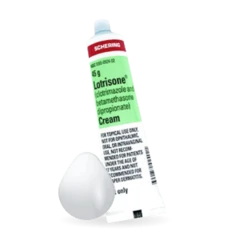
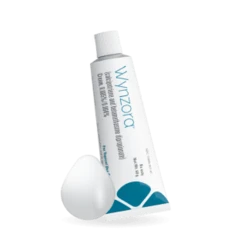
Betamethasone dipropionate (Lotrisone) is a topical corticosteroid that reduces inflammatory skin symptoms such as swelling, redness and itching. It appears in this catalogue as two combination products: Lotrisone and Wynzora.
Key points
- Every product in this catalogue pairs betamethasone dipropionate with a second active ingredient: clotrimazole in Lotrisone and calcipotriol in Wynzora.
- Lotrisone is listed for fungal skin infections such as Tinea Cruris and Tinea Corporis, while Wynzora is listed for plaque psoriasis.
- Absorption of a topical corticosteroid and the risk of adverse effects can increase with excessive or prolonged use.
Common questions about Betamethasone Dipropionate
What is the originator brand behind Lotrisone?
Lotrisone originates from Schering-Plough, while Wynzora is developed by MC2 Therapeutics.
Is betamethasone dipropionate ever listed on its own in this catalogue?
No. Every product here combines it with a second active ingredient (clotrimazole in Lotrisone or calcipotriol in Wynzora), and no single-ingredient formulation is attached.