
Ciclosporin
Ciclosporin (Neoral) is a calcineurin-inhibitor immunosuppressant used to prevent rejection after kidney, liver and heart transplants, and to treat severe rheumatoid arthritis and psoriasis. This catalogue lists Neoral, Opticare Ointment and Ciclosporin Capsules.

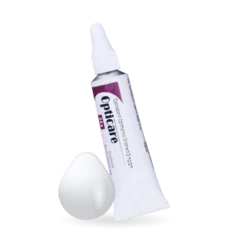
Opticare Ointment
Dry Eye Disease
2mg
Ciclosporin ophthalmic ointment for dry eye disease. It reduces inflammation on the eye surface to help tear glands work properly.

Ciclosporin Capsules
Rheumatoid Arthritis, Psoriasis
50mg · 100mg
Ciclosporin capsules for rheumatoid arthritis and psoriasis. It suppresses T-lymphocyte activity by blocking a specific cell-signalling pathway.
Key points
- Ciclosporin leaves the blood in two phases, with a terminal half-life of about 8.4 hours (range 5 to 18 hours).
- Your liver breaks ciclosporin down mainly through the CYP3A4 enzyme system, with the P-glycoprotein transporter also involved.
- Ciclosporin treatment includes regular blood tests for serum creatinine, a marker doctors use to track your kidney function.
What Ciclosporin is used for
Ciclosporin is also called ciclosporin A; US drug labels use the spelling cyclosporine. As Neoral, it is licensed to prevent Organ Transplant Rejection after kidney, liver and heart transplants, for adults with severe active rheumatoid arthritis that has not adequately responded to methotrexate, and for adults with severe, treatment-resistant Plaque Psoriasis who have failed at least one systemic treatment or cannot tolerate other systemic options.
Safety monitoring and boxed warning
Ciclosporin’s label carries a boxed warning. People previously treated with PUVA light therapy for psoriasis, and to a lesser extent those treated with methotrexate, other immunosuppressants, UVB, coal tar or radiation therapy, are at an increased risk of developing skin cancer while taking Neoral. At recommended doses, ciclosporin can also cause high blood pressure and kidney damage; the risk increases with increasing dose and duration of treatment, and structural kidney damage is a potential consequence, so kidney function must be monitored throughout treatment.
Ciclosporin can also cause liver problems, and cases of liver injury, including cholestasis, jaundice, hepatitis and liver failure, have been reported, some of them fatal; unusual tiredness, yellowing skin or eyes, or dark urine can be signs of this. Like other immunosuppressants, it makes bacterial, fungal, parasitic and viral infections more likely, often from opportunistic pathogens. If you’re being treated for psoriasis or atopic dermatitis, you should avoid unprotected sun exposure and UVB therapy while taking it, because of the skin cancer risk already noted. A rarer effect is swelling at the back of the eye (optic disc oedema) with possible vision changes, linked to a rise in pressure inside the skull.
Further reading
Related articles

23 Sept 2026 ⋅ 8 min read
Psoriasis: From Creams to Systemic Treatment
Psoriasis cannot be cured but is very treatable, and treatment is matched to type, severity and site rather than one fixed order. What each option does, why the joints matter as much as the skin, and the triggers worth knowing.
Read guide
22 Sept 2026 ⋅ 8 min read
Hives and Itchy Welts: What Triggers Them and What Settles Them
Hives usually clear within days and can often be treated at home with antihistamines. What triggers them, why heat and sweat set them off for some people, and the swelling that means calling emergency services.
Read guide