
Ciprofloxacin
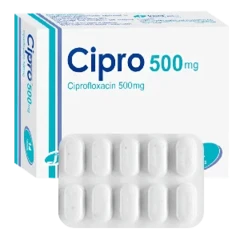
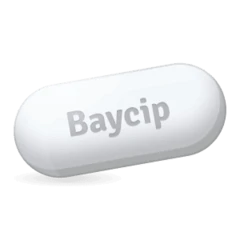
Ciprofloxacin (Cipro) is a fluoroquinolone antibiotic used for infections including infectious diarrhoea, urinary tract infections and bacterial eye infections. This catalogue lists it as tablets and eye drops: Cipro, Baycip, Ciprodex Ophthalmic Solution and Ciloxan Ophthalmic Solution.
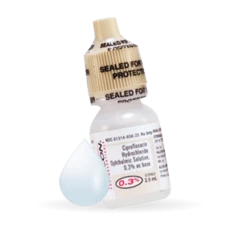
Ciprodex Ophthalmic Solution
Bacterial Conjunctivitis
0.3% + 0.1% 5ml
Ciprofloxacin and dexamethasone eye drops for bacterial conjunctivitis. The steroid component means it should not be used long-term without medical supervision.
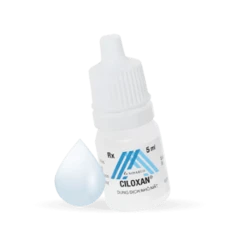
Ciloxan Ophthalmic Solution
Bacterial Corneal Ulcers, Bacterial Conjunctivitis
5ml
Ciprofloxacin eye drops for bacterial corneal ulcers and conjunctivitis. It is for bacterial infections only and will not help viral or allergic eye conditions.
Key points
- Ciprofloxacin is a fluoroquinolone antibiotic that stops bacteria multiplying by blocking two enzymes called topoisomerases, which they need to copy, repair and pass on their DNA.
- A boxed warning limits ciprofloxacin tablets to people who have no alternative treatment for three everyday infections: worsening chronic bronchitis, acute bladder infections and acute sinusitis, because of a risk of serious tendon, nerve and other reactions happening together.
- Ciprofloxacin also blocks a liver enzyme called CYP1A2, so other medicines cleared mainly through that enzyme can reach higher levels in the blood if taken at the same time.
What Ciprofloxacin is used for
Doctors prescribe ciprofloxacin tablets for Infectious Diarrhoea caused by certain bacteria, for typhoid fever, and for urinary tract, bone and joint infections. For complicated infections inside the abdomen it is given together with a second antibiotic, metronidazole. Ciprofloxacin eye drops treat Bacterial Conjunctivitis and bacterial corneal ulcers, applied directly to the eye rather than swallowed.
Brands and forms in this catalogue
Cipro, Bayer’s originator ciprofloxacin tablet, comes in 250mg, 500mg and 750mg strengths. Baycip is a 500mg tablet manufactured by Cipla Ltd, offering the same ingredient under a different brand name. Ciprodex Ophthalmic Solution and Ciloxan Ophthalmic Solution are Alcon Laboratories’ originator eye drops rather than tablets: Ciprodex combines ciprofloxacin with dexamethasone, while Ciloxan contains ciprofloxacin alone. All four sit within this Antibiotics catalogue alongside other bacterial-infection treatments.
Further reading
Related articles

30 Jul 2026 ⋅ 9 min read
Antibiotics and Resistance: Why This Region Is Already Ahead of the Curve
One in three reported bacterial infections in the Eastern Mediterranean Region is already resistant to antibiotics, against one in six globally. What drives it, why antibiotics do nothing for colds and flu, and what an individual can actually change.
Read guide
29 Jul 2026 ⋅ 8 min read
Storing Medicine in a Gulf Summer: What the Label Actually Requires
Most medicines are licensed to be stored below 25°C, and a UAE summer runs well past that. Which medicines fail first in the heat, which ones make heat itself riskier, and what to do about deliveries, cars and travel.
Read guide