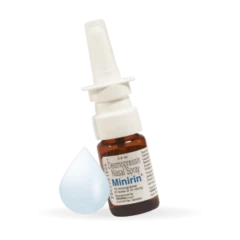
Ddavp Spray
Central Diabetes Insipidus
10mcg 2.5ml
Designed to support water retention to manage central diabetes insipidus and alleviate nighttime bedwetting.
Desmopressin is a replacement hormone for antidiuretic hormone, indicated as antidiuretic replacement therapy in the management of central diabetes insipidus in adults and children aged 4 years and older. The nasal spray form is not indicated for nephrogenic diabetes insipidus, for primary nocturnal enuresis, or for anyone whose intranasal route is compromised. Certain formulations are also used repeatedly to control bleeding in haemophilia or von Willebrand’s disease.
Central Diabetes Insipidus
10mcg 2.5ml
Designed to support water retention to manage central diabetes insipidus and alleviate nighttime bedwetting.
Desmopressin is a replacement hormone for antidiuretic hormone in the treatment of central diabetes insipidus. Its antidiuretic effects are mediated by stimulation of vasopressin 2 (V2) receptors, increasing water reabsorption in the kidney and so reducing urine production. It is a structural analogue of vasopressin in which antidiuretic activity has been enhanced by the order of 10, while the vasopressor effect has been reduced by the order of 1500, so that clinically active antidiuretic doses remain far below the threshold for a vasopressor effect. Like vasopressin, desmopressin also raises concentrations of Factor VIII:C, Factor VIII:Ag and Plasminogen Activator.
The label’s leading caution is water intoxication. Excessive fluid intake when urine output is limited by the antidiuretic effect of desmopressin may lead to water intoxication with hyponatraemia, and cases of hyponatraemia have been reported from postmarketing experience. Unless properly diagnosed and treated, hyponatraemia can be fatal.
Precautions to prevent fluid overload are needed in conditions of fluid or electrolyte imbalance, in anyone at risk of increased intracranial pressure, and where renal function is reduced or cardiovascular disease is present. The same precautions apply in anyone treated with diuretic agents, and when desmopressin is given repeatedly to control bleeding in haemophilia or von Willebrand’s disease. Fluid should not be forced, orally or parenterally: patients should only take as much fluid as they require to satisfy thirst, fluid intake should be restricted to the least possible, and body weight should be checked regularly. If body weight rises steadily, or serum sodium falls below 130mmol/l or plasma osmolality below 270mOsm/kg, the label calls for fluid intake to be reduced drastically and treatment interrupted.
Other medicines add to the hyponatraemia risk. The label names tricyclic antidepressants, selective serotonin re-uptake inhibitors, chlorpromazine, opiate analgesics, NSAIDs, lamotrigine, oxybutynin and carbamazepine as requiring more frequent serum sodium monitoring alongside desmopressin, and separately notes that NSAIDs may induce water retention and/or hyponatraemia. Desmopressin acetate can elevate blood pressure in its own right.
Long-term use of the nasal spray can also change the inside of the nose. Nasal mucosa abnormalities such as scarring and oedema, whether from chronic administration or from other causes such as nasal blockage, nasal mucosal atrophy, severe atrophic rhinitis or recent nasal surgery, may cause erratic, unreliable absorption, and the label advises avoiding the nasal spray in such patients.
Desmopressin is contraindicated in known hypersensitivity to desmopressin acetate or its components, in renal impairment with an estimated creatinine clearance below 50 mL/min, and in hyponatraemia or a history of hyponatraemia. European labelling also lists habitual and psychogenic polydipsia, decompensated cardiac insufficiency, and von Willebrand’s Disease Type IIB, where desmopressin may cause pseudothrombocytopenia through the release of clotting factors that make platelets clump together.
In pregnancy, decades of published experience and case reports have not identified a drug-associated risk of major birth defects, miscarriage or adverse maternal or foetal outcomes, and studies of the human placenta show poor placental transfer of desmopressin. A separate review of a limited number of exposed pregnancies, fifty-three, in women with diabetes insipidus found rare cases of malformations in children treated during pregnancy, while animal studies have not shown direct or indirect harmful effects on pregnancy or foetal development. European labelling nonetheless advises caution when prescribing to pregnant women and recommends blood pressure monitoring because of an increased risk of pre-eclampsia.
Severe allergic reactions and anaphylaxis have been reported with desmopressin: treat any severe allergic reaction as a medical emergency. During treatment, tell your doctor promptly if your weight climbs steadily, since the label ties this to early fluid overload and calls for fluid intake to be cut back and treatment interrupted until you are reviewed.