
Escitalopram
Escitalopram (Lexapro) is an SSRI antidepressant represented in this catalogue. The single film-coated tablet is listed for the treatment of major depressive disorder and generalised anxiety disorder.
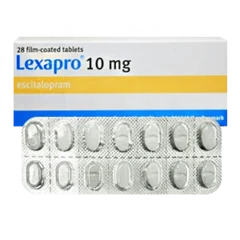
Key points
- Escitalopram works by inhibiting serotonin reuptake in the brain.
- Lexapro is listed in 5 mg, 10 mg and 20 mg film-coated tablets.
- Suicidal thoughts, behavioural changes and serotonin syndrome are important review points during treatment.
Common questions about Escitalopram
Why does Lexapro come in three strengths?
Lexapro is listed in 5 mg, 10 mg and 20 mg tablets so a clinician can tailor the dose to the individual. The range allows for lower and higher daily amounts depending on response and tolerability.
How long does it take for escitalopram to work?
Clinical benefit can take several weeks. The medicine adjusts serotonin levels in the brain, and the full effect may not be felt immediately.
Further reading
Related articles

22 Sept 2026 ⋅ 9 min read
Antidepressants: The Boxed Warning, the First Few Weeks, and Stopping Safely
Every antidepressant carries a boxed warning about suicidal thoughts in young people, the risk concentrates early in treatment, and stopping abruptly causes withdrawal symptoms. What to expect and what to watch for.
Read guide