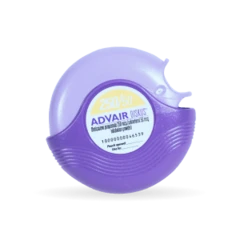
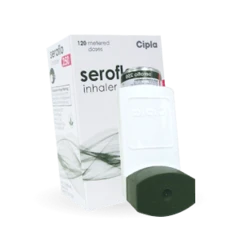
Advair Diskus
Asthma, Chronic Obstructive Pulmonary Disease
100mcg + 50mcg · 250mcg + 50mcg · 500mcg + 50mcg
Formulated to alleviate bronchial constriction to support improved airflow and mitigate asthma symptoms.
Fluticasone propionate is a synthetic trifluorinated corticosteroid with anti-inflammatory activity. As a nasal spray, it is indicated for the management of the nasal symptoms of perennial nonallergic rhinitis in adults and children aged 4 years and older, according to the FDA label for fluticasone propionate nasal spray. Combined with the bronchodilator salmeterol in an inhaler such as Seretide, fluticasone propionate given by inhalation produces a glucocorticoid anti-inflammatory action within the lungs, reducing the symptoms and exacerbations of asthma with fewer adverse effects than corticosteroids taken systemically.
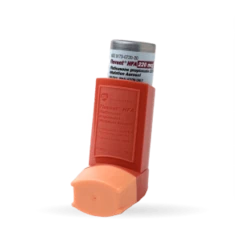
Asthma, Chronic Obstructive Pulmonary Disease
100mcg + 50mcg · 250mcg + 50mcg · 500mcg + 50mcg
Formulated to alleviate bronchial constriction to support improved airflow and mitigate asthma symptoms.
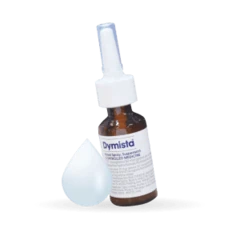
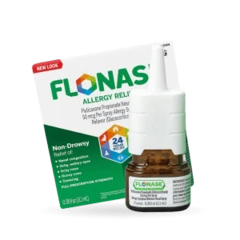
Allergic Rhinitis
50mcg
Indicated to address seasonal mucosal inflammation to relieve sneezing and support comfortable nasal passages.
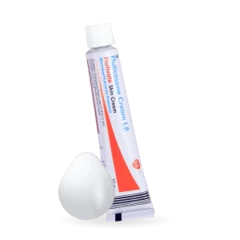
Atopic Dermatitis, Psoriasis
0.05% 10gm
Utilised to manage localised skin inflammation to alleviate stubborn itching and support structural epidermal healing.
Fluticasone propionate is a synthetic trifluorinated corticosteroid with anti-inflammatory activity. Given by inhalation, it produces a glucocorticoid anti-inflammatory action within the lungs, reducing the symptoms and exacerbations of asthma with fewer adverse effects than corticosteroids taken systemically, as described in the Seretide Evohaler SmPC. For the nasal spray, the precise mechanism through which fluticasone propionate affects rhinitis symptoms is not known.
When intranasal corticosteroids are used at higher than recommended dosages, or in susceptible individuals even at recommended dosages, systemic corticosteroid effects such as hypercorticism and adrenal suppression may appear, according to the FDA label for fluticasone propionate nasal spray. If this happens, fluticasone propionate nasal spray should be withdrawn slowly, in the same way that oral corticosteroid therapy is withdrawn; replacing a systemic corticosteroid with a topical corticosteroid can itself be accompanied by signs of adrenal insufficiency.
Intranasal corticosteroids, including fluticasone propionate nasal spray, may cause a reduction in growth velocity when given to children; growth should be monitored routinely in children using it, and each patient’s dose should be titrated to the lowest amount that effectively controls symptoms to minimise systemic effects. Paediatric trials that tracked HPA axis function and bone mineral density, using 12-hour urinary cortisol excretion and dual-energy x-ray absorptiometry testing, found no evidence of clinically relevant changes.
People using drugs that suppress the immune system, including corticosteroids, are more susceptible to infections than healthy individuals. Chickenpox and measles, for example, can take a more serious or even fatal course in susceptible children or adults using corticosteroids; particular care should be taken to avoid exposure in those who have not had these diseases or been properly immunised.
Fluticasone propionate is a substrate of CYP3A4. Using strong CYP3A4 inhibitors such as ritonavir, atazanavir, clarithromycin, itraconazole or ketoconazole alongside fluticasone propionate nasal spray is not recommended, because increased systemic corticosteroid adverse effects may occur.
If you use a fluticasone propionate inhaler combined with a bronchodilator such as salmeterol for asthma, a sudden and progressive worsening of asthma control is potentially life-threatening and needs urgent medical assessment, as set out in the Seretide Evohaler SmPC. Needing your reliever inhaler more often, or finding it less effective, are themselves signs that asthma control is deteriorating and should prompt a review by a physician.