Skip to content

Ketorolac

Ketorolac tromethamine is a nonsteroidal anti-inflammatory drug (NSAID) that exhibits analgesic activity in animal models. It is indicated for the short-term (≤5 days) management of moderately severe acute pain that requires analgesia at the opioid level, usually in a postoperative setting. Therapy should always be initiated with intravenous or intramuscular dosing of ketorolac tromethamine, and oral ketorolac tromethamine is to be used only as continuation treatment, if necessary.

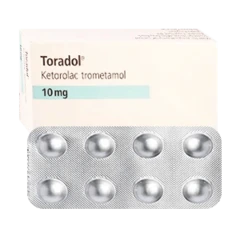
Toradol

Moderately Severe Acute Pain

10mg

Formulated to alleviate severe acute pain to support comfortable physical recovery and target inflammatory pathways.

From$0.67/ tabletView

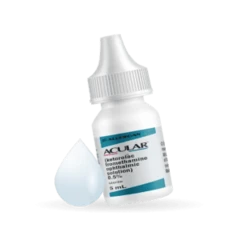
Acular

Conjunctivitis, Ocular Inflammation

0.4%

Developed to alleviate ocular inflammation to support vision healing.

From$22.00/ bottleView

Key points

  • “A single-dose study with 10 mg ketorolac tromethamine (n = 9) demonstrated that the S-enantiomer is cleared approximately two times faster than the R-enantiomer and that the clearance was independent of the route of administration.”
  • The boxed warning states that “Ketorolac tromethamine can cause peptic ulcers, gastrointestinal bleeding and/or perforation of the stomach or intestines, which can be fatal. These events can occur at any time during use and without warning symptoms.”
  • The injection is “CONTRAINDICATED for intrathecal or epidural administration due to its alcohol content.”

How it works

The US prescribing information states that the “mechanism of action of ketorolac, like that of other NSAIDs, is not completely understood but may be related to prostaglandin synthetase inhibition.” The Toradol summary of product characteristics describes it as “a potent analgesic agent of the non-steroidal, anti-inflammatory class (NSAID)” whose “mode of action is to inhibit the cyclooxygenase enzyme system and hence prostaglandin synthesis, and it demonstrates a minimal anti-inflammatory effect at its analgesic dose.” It “is not an opioid and has no known effects on opioid receptors.”

Safety specific to Ketorolac

The US prescribing information carries this boxed warning in full.

  1. “Ketorolac tromethamine, a nonsteroidal anti-inflammatory drug (NSAID), is indicated for the short-term (up to 5 days in adults) management of moderately severe acute pain that requires analgesia at the opioid level. Oral ketorolac tromethamine is indicated only as continuation treatment following intravenous or intramuscular dosing of ketorolac tromethamine, if necessary. The total combined duration of use of oral ketorolac tromethamine and ketorolac tromethamine injection should not exceed 5 days.” “Ketorolac tromethamine is not indicated for use in pediatric patients and it is NOT indicated for minor or chronic painful conditions. Increasing the dose of ketorolac tromethamine beyond the label recommendations will not provide better efficacy but will increase the risk of developing serious adverse events.”
  2. “Ketorolac tromethamine can cause peptic ulcers, gastrointestinal bleeding and/or perforation of the stomach or intestines, which can be fatal. These events can occur at any time during use and without warning symptoms. Therefore, ketorolac tromethamine is CONTRAINDICATED in patients with active peptic ulcer disease, in patients with recent gastrointestinal bleeding or perforation, and in patients with a history of peptic ulcer disease or gastrointestinal bleeding. Elderly patients are at greater risk for serious gastrointestinal events (see WARNINGS).”
  3. “Nonsteroidal anti-inflammatory drugs (NSAIDs) cause an increased risk of serious cardiovascular thrombotic events, including myocardial infarction and stroke, which can be fatal. This risk may occur early in treatment and may increase with duration of use (see WARNINGS and PRECAUTIONS).”
  4. “Ketorolac tromethamine is CONTRAINDICATED in the setting of coronary artery bypass graft (CABG) surgery (see CONTRAINDICATIONS and WARNINGS).”
  5. “Ketorolac tromethamine is CONTRAINDICATED in patients with advanced renal impairment and in patients at risk for renal failure due to volume depletion (see WARNINGS).”
  6. “Ketorolac tromethamine inhibits platelet function and is, therefore, CONTRAINDICATED in patients with suspected or confirmed cerebrovascular bleeding, patients with hemorrhagic diathesis, incomplete hemostasis and those at high risk of bleeding (see WARNINGS and PRECAUTIONS).” “Ketorolac tromethamine is CONTRAINDICATED as prophylactic analgesic before any major surgery.”
  7. “Hypersensitivity reactions, ranging from bronchospasm to anaphylactic shock, have occurred and appropriate counteractive measures must be available when administering the first dose of ketorolac tromethamine injection (see CONTRAINDICATIONS and WARNINGS). Ketorolac tromethamine is CONTRAINDICATED in patients with previously demonstrated hypersensitivity to ketorolac tromethamine or allergic manifestations to aspirin or other nonsteroidal anti-inflammatory drugs (NSAIDs).”
  8. “Ketorolac tromethamine is CONTRAINDICATED for intrathecal or epidural administration due to its alcohol content.”
  9. “The use of ketorolac tromethamine in labor and delivery is CONTRAINDICATED because it may adversely affect fetal circulation and inhibit uterine contractions.”
  10. “CONCOMITANT USE WITH NSAIDs”
  11. “Ketorolac tromethamine is CONTRAINDICATED in patients currently receiving aspirin or NSAIDs because of the cumulative risk of inducing serious NSAID-related side effects.”
  12. “Dosage should be adjusted for patients 65 years or older, for patients under 50 kg (110 lbs.) of body weight (see DOSAGE AND ADMINISTRATION) and for patients with moderately elevated serum creatinine (see WARNINGS). Doses of ketorolac tromethamine injection are not to exceed 60 mg (total dose per day) in these patients.”
  13. “Ketorolac Tromethamine Tablets”
  14. “Ketorolac tromethamine tablets are indicated only as continuation therapy to ketorolac tromethamine injection, and the combined duration of use of ketorolac tromethamine injection and ketorolac tromethamine tablets is not to exceed 5 (five) days, because of the increased risk of serious adverse events.”
  15. “The recommended total daily dose of ketorolac tromethamine tablets (maximum 40 mg) is significantly lower than for ketorolac tromethamine injection (maximum 120 mg) (see DOSAGE AND ADMINISTRATION).”

The Toradol summary of product characteristics adds that “ketorolac may be associated with a high risk of serious gastrointestinal toxicity, relative to some other NSAIDs, especially when used outside the licensed indications and/or for prolonged periods”. It also states that “NSAIDs, including ketorolac, may be associated with increased risk of gastro-intestinal anastomotic leak” and that “Close medical surveillance and caution are recommended when using ketorolac after gastro-intestinal surgery.” For patients with inflammatory bowel disease, the SmPC advises that “NSAIDs should be given with care to patients with a history of inflammatory bowel disease, (ulcerative colitis, Crohn’s disease) as these conditions may be exacerbated”. The SmPC also lists ketorolac as “also contraindicated in” cases including “those with a history of asthma” and “children under 16 years of age.”

When to seek urgent care

The label states: “Inform patients about the signs and symptoms of serious skin reactions, and to discontinue the use of ketorolac tromethamine injection at the first appearance of skin rash or any other sign of hypersensitivity.” A related drug reaction, DRESS, “typically, although not exclusively, presents with fever, rash, lymphadenopathy, and/or facial swelling,” and “early manifestations of hypersensitivity, such as fever or lymphadenopathy, may be present even though rash is not evident.” Rare but serious liver injury has also been reported: “rare cases of severe hepatic reactions, including jaundice and fatal fulminant hepatitis, liver necrosis and hepatic failure, some of them with fatal outcomes have been reported.” For patients with a history of gastrointestinal problems, particularly older adults, the SmPC advises that they “should report any unusual abdominal symptoms (especially GI bleeding) particularly in the initial stages of treatment.”

Further reading

Related articles