
Ondansetron
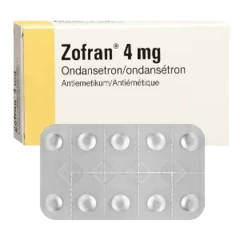
Ondansetron (Zofran) is used to prevent nausea and vomiting during cancer treatment or after surgery. This catalogue includes one Zofran tablet formulation for this ingredient.
Key points
- 5-HT3 receptor antagonist: Ondansetron blocks a signal involved in nausea and vomiting.
- Heart rhythm warning: Avoid ondansetron if you have congenital long QT syndrome.
- ECG monitoring: The label directs monitoring with an ECG where there are electrolyte abnormalities, cardiac failure, arrhythmias, or other QT-prolonging medicines.
Common questions about ondansetron
Can ondansetron be taken with apomorphine?
No. Ondansetron and apomorphine must not be used together. The product information lists this combination as a contraindication, meaning the two medicines should not be taken at the same time.
What is known about ondansetron and serotonergic medicines?
Serotonin syndrome has been reported with 5-HT3 receptor antagonists, particularly when they are used with serotonergic medicines. The product information gives this warning for ondansetron, including the Zofran tablet listed here.