Promethazine
Promethazine is a sedating antihistamine used for allergic conditions, nausea and motion sickness. Its label carries a boxed warning with two separate limbs, one about children and one about tissue damage at the injection site, and both are absolute rather than cautionary.
Promethazine Tablets
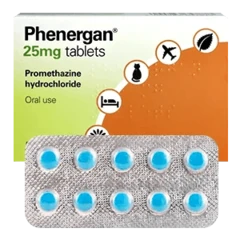
Allergic Rhinitis, Motion Sickness, Nausea
25mg
Developed to mitigate histamine and emetic triggers to support motion comfort and alleviate sneezing.
Key points
- Promethazine is contraindicated for use in paediatric patients less than two years of age, because of the potential for fatal respiratory depression.
- Postmarketing cases of respiratory depression, including fatalities, have been reported with use of promethazine in patients under 2.
- Caution should be exercised when administering it to paediatric patients 2 years of age and older.
- Severe chemical irritation and tissue damage has been reported regardless of the route of parenteral administration, including gangrene, tissue necrosis and thrombophlebitis.
How it works
Promethazine is a first-generation antihistamine that crosses readily into the central nervous system, which produces both its sedative effect and its action against nausea and motion sickness. That same central action is what underlies the respiratory depression risk in very young children.
Safety specific to promethazine
Children under 2. The boxed warning is a contraindication rather than a caution: promethazine is contraindicated for use in paediatric patients less than two years of age, because of the potential for fatal respiratory depression. The label records postmarketing cases of respiratory depression, including fatalities, in patients under 2. For children 2 years and older it asks that caution be exercised.
Severe tissue injury. The second limb concerns the injectable form. Severe chemical irritation and damage to tissues has been reported regardless of the route of parenteral administration, including gangrene, tissue necrosis and thrombophlebitis. In some cases surgical intervention has been required, including fasciotomy, skin graft, or amputation.
That phrase, regardless of route, is the important one. It means the injury is not confined to accidental arterial injection, which is how this risk is often described in summary.
When to seek urgent care
Slow, shallow or difficult breathing, or unusual difficulty rousing a child who has been given promethazine, needs emergency attention. So does pain, burning, discolouration or swelling at an injection site, which are the early signs of the tissue injury described above.