Rizatriptan
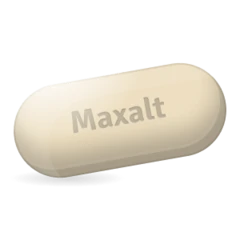
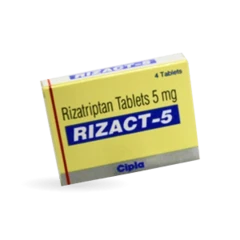
Rizatriptan is a selective serotonin 5-HT1B/1D receptor agonist, commonly called a triptan. Maxalt and Rizact are the two attached single-ingredient tablet records, each represented at 5 mg and 10 mg.
Key points
- Rizatriptan treats an acute migraine attack; it is not a preventive medicine.
- Maxalt and Rizact contain the same active ingredient at the listed 5 mg and 10 mg strengths.
- Standard tablets and orally disintegrating tablets are different dosage forms even when the strength matches.
- Cardiovascular history and recent use of another triptan or ergot medicine are important safety checks.
Acute treatment, not prevention
Rizatriptan acts on serotonin receptors involved in cranial blood vessels and trigeminal sensory pathways. The records connect to a migraine attack within neurology, but neither a brand name nor a strength establishes that a headache is migraine.
The official Maxalt label covers both conventional and orally disintegrating tablets. The attached catalogue records are standard tablets, so the dosage-form wording should remain specific rather than treating the two forms as identical.
The cardiovascular boundary
Rizatriptan is contraindicated in several vascular conditions, including ischaemic coronary disease, previous stroke or transient ischaemic attack, peripheral vascular disease and uncontrolled hypertension. Chest pressure, shortness of breath, marked weakness or a new neurological symptom needs urgent assessment rather than another dose.
Frequent use of acute headache medicines can also worsen headache frequency. A headache diary can help separate individual treated attacks from a pattern that needs preventive review.