Skip to content

Tiotropium

Tiotropium bromide is a long-acting inhaled anticholinergic. Its label indicates it for the long-term, once-daily maintenance treatment of bronchospasm associated with chronic obstructive pulmonary disease. The most important thing on that label is a boundary: it is not a rescue medicine.

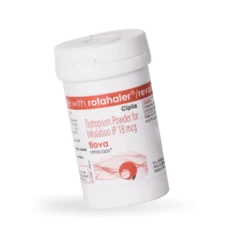
Tiova Rotacap

Chronic Obstructive Pulmonary Disease

18mcg

Indicated to address chronic bronchospastic conditions to relieve breathing restriction and support steady pulmonary expansion.

From$0.76/ capsuleView

Key points

  • The label indicates it for the long-term, once-daily, maintenance treatment of bronchospasm associated with COPD, including chronic bronchitis and emphysema.
  • It is also indicated to reduce exacerbations in COPD patients, which is a separate benefit from day-to-day symptom control.
  • The label states it is not for acute use and is not a rescue medication.
  • Worsening of narrow-angle glaucoma may occur, and patients should be instructed to consult a physician immediately if it does.

How it works

Tiotropium is an anticholinergic, blocking the muscarinic receptors that drive airway smooth muscle contraction. Its long duration is what allows once-daily dosing and what makes it a maintenance treatment rather than a reliever.

That mechanism also explains its interaction profile. The label states that anticholinergics may interact additively with concomitantly used anticholinergic medications and advises avoiding administration with other anticholinergic-containing drugs, which is worth checking against a full medicine list rather than assumed.

Safety specific to tiotropium

Not a rescue medicine. The label states this directly under warnings: not for acute use, not a rescue medication. Someone experiencing sudden breathlessness needs their short-acting reliever such as salbutamol, and reaching for a maintenance inhaler instead loses time.

Paradoxical bronchospasm. The label instructs that tiotropium be discontinued and other treatments considered if paradoxical bronchospasm occurs, meaning the airway tightening rather than opening after a dose.

Narrow-angle glaucoma. Worsening of narrow-angle glaucoma may occur. The label advises using it with caution in patients with narrow-angle glaucoma and instructing patients to consult a physician immediately if that happens.

Kidney function. Patients with moderate to severe renal impairment should be monitored closely for potential anticholinergic side effects.

When to seek urgent care

Sudden breathlessness needs a reliever inhaler and urgent assessment, not a maintenance dose. Airway tightening after taking tiotropium, or eye pain and visual disturbance suggesting worsening narrow-angle glaucoma, are the two events the label asks patients to act on immediately.

Further reading