Tobramycin
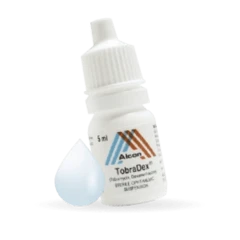
Tobramycin is an aminoglycoside antibiotic. Given by injection, it is used to treat serious bacterial infections that are proven or strongly suspected to involve susceptible bacteria, including septicaemia caused by organisms such as Pseudomonas aeruginosa, E. coli and Klebsiella species, according to the tobramycin injection prescribing information. Tobramycin is also formulated for use in the eye, including combined with the corticosteroid dexamethasone in eye drops such as Tobradex, under the Tobradex eye drops SmPC.
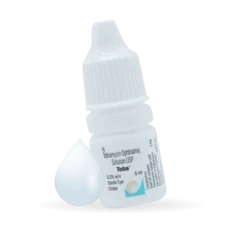
Toba Eye Drops
Superficial Ocular Infections
0.3% 5ml
Developed to mitigate superficial ocular bacterial pathogens to support eye membrane safety and target bacterial protein synthesis.
Key points
- Serious allergic and skin reactions, including anaphylaxis, exfoliative dermatitis, toxic epidermal necrolysis, erythema multiforme and Stevens-Johnson syndrome, have been reported rarely in patients on tobramycin therapy.
- The injectable form contains sodium bisulfite, a sulfite that can cause allergic-type reactions, including anaphylactic symptoms and asthma-like episodes, in susceptible people; overall prevalence of this sensitivity is unknown and probably low, but it is seen more often in people with asthma.
- A past hypersensitivity reaction to any aminoglycoside, whether to tobramycin or another drug in the class, rules out tobramycin, because cross-sensitivity across aminoglycosides is recognised, including when tobramycin is used as an eye drop.
- For the eye drop combination, no clinically relevant drug interactions have been described with topical ocular dosing.
How it works
Tobramycin is a potent, broad-spectrum, rapidly bactericidal aminoglycoside antibiotic, meaning it acts quickly to kill susceptible bacteria across a wide range of species.
Safety specific to Tobramycin
Tobramycin injection carries a boxed warning, as for any aminoglycoside: patients should be under close clinical observation because these drugs have an inherent potential for causing ototoxicity (damage to hearing and balance) and nephrotoxicity (kidney damage), as detailed in MedlinePlus’s tobramycin injection information. The hearing and balance damage this can cause is irreversible, usually affects both ears, and may be partial or total; it can develop alongside kidney impairment, particularly in people with pre-existing kidney damage or in those with normal kidney function who are treated for longer periods or at higher doses than recommended. Other signs of this nerve toxicity can include numbness, skin tingling, muscle twitching and convulsions. The risk of hearing loss rises with the degree of exposure to high peak or high trough blood concentrations of the drug. Some patients who go on to develop inner-ear damage have no symptoms during treatment to warn them, and partial or total irreversible deafness in both ears may continue to develop even after the drug has been stopped. Kidney injury from tobramycin is usually reversible, though rarely it does not become apparent until the first few days after treatment ends.
Because of this, kidney and eighth-nerve (hearing and balance) function should be closely monitored in anyone with known or suspected kidney impairment, and also in patients whose kidney function starts out normal but who develop signs of kidney dysfunction during treatment. Blood levels of the drug should be checked periodically to keep them effective without becoming toxic, since drug accumulation in the body, unusually high peak levels, older age and a higher cumulative dose can all add to the risk of hearing and kidney toxicity. Urine should be checked for signs of kidney stress, blood tests of kidney function should be done periodically, and hearing tests are recommended where practical, particularly for patients at higher risk. Any evidence of reduced kidney, balance or hearing function requires stopping the drug or adjusting the dose. Premature and newborn babies need particular caution because their kidneys are still immature, which prolongs how long the drug stays in their body.
Tobramycin injection should not be used together with, or straight after, other drugs that can damage the nerves or kidneys, particularly other aminoglycosides such as amikacin, streptomycin, neomycin, kanamycin, gentamicin and paromomycin, and other agents such as cephaloridine, viomycin, polymyxin B, colistin, cisplatin and vancomycin; older age and dehydration add to the risk. Aminoglycosides should also not be given at the same time as potent diuretics such as ethacrynic acid and furosemide, because some diuretics cause ototoxicity in their own right and, given intravenously, can increase aminoglycoside toxicity by altering how much of the antibiotic ends up in the blood and tissues.
Aminoglycosides, tobramycin included, can cause harm to a baby when given to a pregnant woman. After intravenous dosing, tobramycin is known to cross the placenta into the fetus, although it is not expected to cause hearing or balance damage from exposure in the womb. There is little to no data on topical ocular use of the tobramycin and dexamethasone eye drop combination in pregnancy.
Used in the eye, tobramycin can still cause sensitivity reactions in some patients, ranging from local effects to more generalised reactions such as redness, itching, hives, skin rash, anaphylaxis, anaphylactoid reactions or blistering. Anyone who becomes sensitised to topical tobramycin may also be sensitive to other aminoglycosides, whether applied to the eye or given systemically, so this cross-reactivity should be considered. Because serious nerve, hearing and kidney toxicity have occurred with aminoglycosides given systemically, caution is advised when Tobradex eye drops are used at the same time as a systemic aminoglycoside. Aminoglycosides can also worsen muscle weakness through their effect on neuromuscular function, so caution is advised when prescribing Tobradex eye drops to patients with a known or suspected neuromuscular disorder such as myasthenia gravis or Parkinson’s disease.
When to seek urgent care
Get urgent medical attention for any sign of a serious allergic or skin reaction, such as widespread rash, hives, or blistering or peeling skin; these have been reported rarely with tobramycin and can include anaphylaxis, exfoliative dermatitis, toxic epidermal necrolysis, erythema multiforme or Stevens-Johnson syndrome. Also seek prompt medical advice for new numbness, skin tingling, muscle twitching or convulsions, or for any change in hearing or balance, as these can be signs of nerve or hearing toxicity.