
Amoxicillin
Amoxicillin (Amoxil) is a penicillin antibiotic used for bacterial infections. This listing brings together four medicines from different brands: Amoxil, Augmentin, Advent DT and Cenmox.
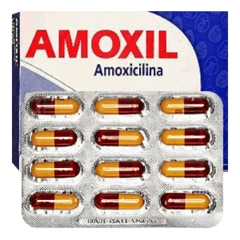



Key points
- Forms listed: The catalogue includes tablet and capsule forms across the four medicines.
- Clavulanic acid: Augmentin and Advent DT contain it alongside amoxicillin, while Amoxil and Cenmox contain amoxicillin as the single active ingredient.
- Serious hypersensitivity: Amoxicillin is not suitable if you have had a serious reaction, such as anaphylaxis or Stevens-Johnson syndrome, to amoxicillin, another penicillin or a cephalosporin.
What amoxicillin is used for
Amoxicillin is used for Bacterial Infections, such as chest infections including pneumonia and dental abscesses. With other antibiotics and medicines, it can also be part of treatment for Helicobacter Pylori Infection and stomach ulcers.
How amoxicillin works
As a penicillin antibiotic, amoxicillin prevents susceptible bacteria from building cell walls while they multiply. Without a proper cell wall, the bacteria die.
Further reading
Related articles

30 Jul 2026 ⋅ 9 min read
Antibiotics and Resistance: Why This Region Is Already Ahead of the Curve
One in three reported bacterial infections in the Eastern Mediterranean Region is already resistant to antibiotics, against one in six globally. What drives it, why antibiotics do nothing for colds and flu, and what an individual can actually change.
Read guide