Clindamycin Tablets
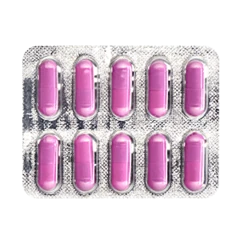
Bacterial Infections
150mg · 300mg
Intended to relieve bacterial proliferation to support tissues during recovery and target anaerobic microflora.
Clindamycin is a lincosamide antibiotic. Its oral capsule label indicates it for serious infections caused by susceptible anaerobic bacteria, and for serious infections due to susceptible strains of streptococci, pneumococci and staphylococci. That label also states its use should be reserved for penicillin-allergic patients, or others for whom a penicillin is inappropriate, and it carries a boxed warning about colitis.
Bacterial Infections
150mg · 300mg
Intended to relieve bacterial proliferation to support tissues during recovery and target anaerobic microflora.
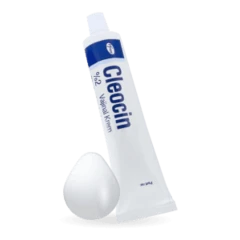
Acne Vulgaris
1% 20gm
Formulated to alleviate bacterial epidermal activity to support clear skin texture and target active inflammatory lesions.
The UK summary of product characteristics states that lincosamides such as clindamycin bind to the 50S subunit of the bacterial ribosome and inhibit protein synthesis. Its action is predominantly bacteriostatic, although the same document notes that high concentrations may be slowly bactericidal against sensitive strains. Clindamycin phosphate is inactive in the test tube, and rapid hydrolysis in the body converts it to the antibacterially active form.
The boxed warning on the oral label has four parts.
It opens by stating that Clostridioides difficile-associated diarrhoea has been reported with use of nearly all antibacterial agents, including clindamycin, and may range in severity from mild diarrhoea to fatal colitis. Treatment with antibacterial agents alters the normal flora of the colon, which lets C. difficile overgrow.
Because clindamycin therapy has been associated with severe colitis which may end fatally, the warning says it should be reserved for serious infections where less toxic antimicrobial agents are inappropriate. It should not be used in patients with nonbacterial infections such as most upper respiratory tract infections.
The third part explains why the risk outlasts the course. C. difficile produces toxins A and B, and hypertoxin-producing strains cause increased morbidity and mortality because those infections can resist antimicrobial therapy and may require colectomy. The warning states that C. difficile-associated diarrhoea must be considered in all patients who present with diarrhoea following antibacterial drug use, and that a careful medical history is necessary since it has been reported to occur over two months after the antibacterial was given. Two months, not two weeks, is the window the label sets.
The fourth part sets out the response. If C. difficile-associated diarrhoea is suspected or confirmed, ongoing antibacterial drug use not directed against C. difficile may need to be discontinued, and appropriate fluid and electrolyte management, protein supplementation, antibacterial treatment of C. difficile and surgical evaluation should be instituted as clinically indicated.
Outside the box, the summary of product characteristics warns of severe hypersensitivity reactions, including drug reaction with eosinophilia and systemic symptoms (DRESS), Stevens-Johnson syndrome and toxic epidermal necrolysis. The oral label separately records that vesiculobullous rashes and urticaria have been observed during therapy, and that jaundice and abnormalities in liver function tests have been seen.
Diarrhoea that develops during a course of clindamycin, or at any point in the two months after one finishes, needs medical assessment rather than an anti-diarrhoeal bought over the counter, particularly when it is severe, persistent, or contains blood or mucus. A spreading rash with blistering or peeling, or yellowing of the skin or eyes, also warrants prompt attention.

28 Jul 2026 ⋅ 8 min read
About 95% of people aged 11 to 30 get acne to some extent. It is driven by hormones and blocked follicles rather than by dirt, treatments take months to work, and picking spots causes permanent scarring.
Read guide