Clobetasol Propionate
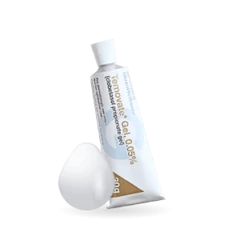
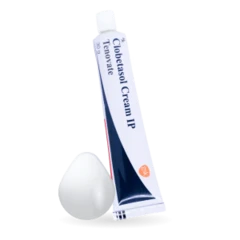
Clobetasol propionate is a topical corticosteroid supplied as an ointment. According to the US prescribing information for clobetasol propionate ointment, it is a super-high potency corticosteroid formulation indicated for the relief of the inflammatory and pruritic features of corticosteroid-responsive skin conditions. Like other topical corticosteroids, it has anti-inflammatory, antipruritic and vasoconstrictive properties.
Key points
- The ointment contains clobetasol propionate 0.5 mg/g in a base of propylene glycol, sorbitan sesquioleate and white petrolatum.
- In clinical trials, the most frequently reported adverse events were burning sensation, irritation and itching, each affecting 0.5% of treated patients.
- In one study, mean peak plasma concentrations of clobetasol propionate reached 0.63 ng/ml in healthy individuals following application of the 0.05% ointment to intact skin.
How it works
The Dermovate Cream Summary of Product Characteristics states that topical corticosteroids act as anti-inflammatory agents through multiple mechanisms to inhibit late phase allergic reactions, including decreasing the density of mast cells, decreasing chemotaxis and activation of eosinophils, decreasing cytokine production by lymphocytes, monocytes, mast cells and eosinophils, and inhibiting the metabolism of arachidonic acid. Like other topical corticosteroids, clobetasol propionate also has anti-inflammatory, antipruritic and vasoconstrictive properties, though the mechanism of this anti-inflammatory activity in topical steroids, in general, is unclear.
Safety specific to clobetasol propionate
According to the label for clobetasol propionate ointment, it should not be used on the face, groin or axillae, or to treat rosacea or perioral dermatitis. Because it can be absorbed systemically, it can cause reversible suppression of the hypothalamic-pituitary-adrenal axis, with the potential for glucocorticosteroid insufficiency after stopping treatment; some patients have also developed Cushing’s syndrome, high blood glucose and glucose in the urine from this systemic absorption. With long-term use beyond the recommended doses, cases of osteonecrosis, serious infections including necrotizing fasciitis, and systemic immunosuppression, sometimes resulting in reversible Kaposi’s sarcoma lesions, have been reported.
It is not recommended for patients under 12 years of age. Because children have a higher ratio of skin surface area to body mass than adults, they are at greater risk of HPA axis suppression and Cushing’s syndrome when treated with topical corticosteroids. In pregnancy, the Dermovate Cream Summary of Product Characteristics states that clobetasol should only be used if the expected benefit to the mother outweighs the risk to the foetus. Systemically administered corticosteroids also appear in human milk and could suppress growth, interfere with the body’s own corticosteroid production, or cause other untoward effects, so nursing mothers should use it with caution.
Clobetasol propionate ointment is contraindicated in patients with a history of hypersensitivity to any of its components.
Further reading
Related articles

28 Jul 2026 ⋅ 8 min read
Eczema in an Air-Conditioned Climate: Managing Flare-Ups Here
Heat and changes in temperature are recognised eczema triggers, and life here means moving between 45°C outside and cold dry air indoors all day. What treatment involves, and the infection signs that need urgent attention.
Read guide
28 Jul 2026 ⋅ 8 min read
Psoriasis: From Creams to Systemic Treatment, and What Comes First
Psoriasis cannot be cured but is very treatable, and treatment escalates in a deliberate order. What each tier does, why the joints matter as much as the skin, and the triggers worth knowing.
Read guide