Moxifloxacin
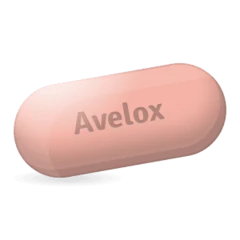
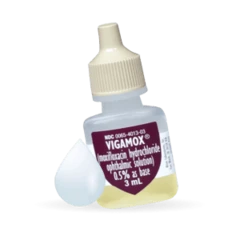
Moxifloxacin is a member of the fluoroquinolone class of anti-infective drugs. The active ingredient is sold as Avelox 400 mg film-coated tablets, taken by mouth, and, in a separate product, as moxifloxacin ophthalmic solution eye drops. In clinical trials, moxifloxacin ophthalmic solution produced clinical cures on day five or six in 66% to 69% of patients treated for bacterial conjunctivitis.
Vigamox Ophthalmic Solution
Bacterial Conjunctivitis
0.5% 5ml
Utilised to manage superficial ocular bacterial pathogens to support eye tissue health and target bacterial replication.
Key points
- The eye drops have been linked to nonocular adverse effects reported at a rate of one to four percent, including fever, increased cough, infection, otitis media, pharyngitis, rash and rhinitis.
- No drug-drug interaction studies have been conducted with the eye drops, though in vitro testing indicates moxifloxacin does not inhibit the enzymes CYP3A4, CYP2D6, CYP2C9, CYP2C19 or CYP1A2, so it is unlikely to change how medicines broken down by those enzymes are handled.
- Avelox tablets are rapidly and almost completely absorbed after oral administration, reaching an absolute bioavailability of approximately 91%.
How it works
Moxifloxacin’s bactericidal action comes from inhibiting both type II topoisomerases, DNA gyrase and topoisomerase IV, enzymes bacteria need for DNA replication, transcription and repair. DNA gyrase is an essential enzyme involved in these processes, and topoisomerase IV plays a key role in separating the bacterial chromosome when a bacterial cell divides. In vitro, moxifloxacin has activity against a wide range of Gram-positive and Gram-negative pathogens. Its mechanism of action differs from that of macrolides, aminoglycosides and tetracyclines.
Safety specific to Moxifloxacin
Moxifloxacin ophthalmic solution (eye drops). In patients receiving systemically administered quinolones, including moxifloxacin, serious and occasionally fatal hypersensitivity reactions have been reported, some following the first dose, with reactions including cardiovascular collapse, loss of consciousness, angioedema, airway obstruction, breathing difficulty, hives and itching; if an allergic reaction occurs, the drug should be stopped. As with other anti-infectives, prolonged use may result in overgrowth of non-susceptible organisms, including fungi, and if a superinfection occurs, use should be stopped and alternative therapy started. Patients should also be advised not to wear contact lenses if they have signs or symptoms of bacterial conjunctivitis.
Avelox 400 mg film-coated tablets. The Avelox SmPC lists “Patients with a history of tendon disease/disorder related to quinolone treatment” among its contraindications, alongside hypersensitivity to moxifloxacin, other quinolones or the excipients. Beyond that contraindication, the SmPC warns: “Tendinitis and tendon rupture (especially but not limited to Achilles tendon), sometimes bilateral, may occur as early as within 48 hours of starting treatment with quinolones and fluoroquinolones and have been reported to occur even up to several months after discontinuation of treatment.” It adds that “The risk of tendinitis and tendon rupture is increased in older patients, patients with renal impairment, patients with solid organ transplants, and those treated concurrently with corticosteroids.” Hypersensitivity and allergic reactions have also been reported for fluoroquinolones including moxifloxacin after first administration, and anaphylactic reactions can progress to a life-threatening shock even after the first administration. Moxifloxacin has been shown to prolong the QTc interval on the electrocardiogram in some patients.
When to seek urgent care
If you use the eye drops and notice signs of an allergic reaction, such as swelling of the face or throat, difficulty breathing, collapse or loss of consciousness, hives or itching, seek care straight away: the label states that “If an allergic reaction to moxifloxacin occurs, discontinue use of the drug.”
If you take the Avelox tablets, the SmPC is direct about what to do if a tendon problem appears: “At the first sign of tendinitis (e.g. painful swelling, inflammation) the treatment with moxifloxacin should be discontinued and alternative treatment should be considered.” It adds that “The affected limb(s) should be appropriately treated (e.g. immobilisation).” If an irregular heartbeat develops, the SmPC advises that “If signs of cardiac arrhythmia occur during treatment with moxifloxacin, treatment should be stopped and an ECG should be performed.”