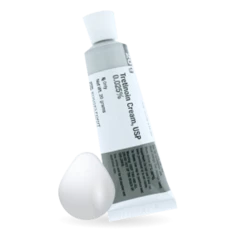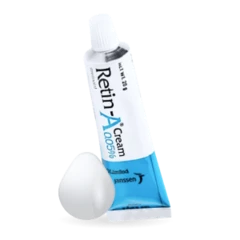
Retin A 0,05
Acne Vulgaris
20g
Intended to relieve follicular blockage to support skin renewal and target active acne lesions.
Tretinoin is a retinoid medicine applied to the skin to treat acne, as summarised in MedlinePlus’s tretinoin drug information. In the United States, RETIN-A’s prescribing information indicates it for topical application in the treatment of acne vulgaris. Tretinoin is also combined with the antibiotic clindamycin in Treclin gel, and it occurs naturally in the body as a metabolite of retinol, or vitamin A.
Acne Vulgaris
20g
Intended to relieve follicular blockage to support skin renewal and target active acne lesions.
Acne Vulgaris
20g
Formulated to alleviate follicular blockages to support skin turnover and target comedone resolution.
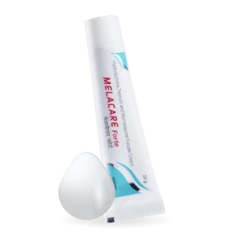
Melasma
4% + 0.025% + 0.1% 25gm
Utilised to manage facial hyperpigmentation to alleviate melasma and support clear epidermal skin color levels.
The exact mode of action of tretinoin is unknown, but current evidence suggests that topical tretinoin reduces the cohesiveness of follicular epithelial cells and decreases microcomedo formation. It also stimulates mitotic activity and increased turnover of these cells, helping to extrude the comedones. In Treclin, tretinoin works alongside clindamycin, and the two active substances act through different mechanisms; clindamycin itself is inactive until it is converted in the body to its active antibacterial form. Studies of Treclin gel found that tretinoin’s absorption through the skin was minimal, with plasma concentrations undetectable in most people tested.
This section draws on the labelling for RETIN-A and for Treclin, the combined clindamycin and tretinoin gel, both used on the skin to treat acne vulgaris; the label notes that the safety and efficacy of using this product long-term for other conditions has not been established.
If a reaction suggesting sensitivity or chemical irritation develops, the label advises stopping use of the medicine. Contact with the mouth, eyes, mucous membranes and broken or eczema-affected skin should be avoided. Products with a strong drying effect, including medicated or abrasive soaps and cleansers, and preparations containing alcohol, astringents, spices or lime, should be used cautiously alongside tretinoin because of the possibility of interaction, and the same caution applies to keratolytic ingredients such as sulfur, salicylic acid, benzoyl peroxide or resorcinol. Medicated cleansers or scrubbing solutions with a strong drying effect should not be used by anyone on topical tretinoin therapy, and tretinoin-containing products should not be applied at the same time as other topical preparations, including cosmetics, because of possible interaction.
Tretinoin increases the skin’s sensitivity to sunlight, so exposure to sunlight and sunlamps should be kept to a minimum during treatment, with a sunscreen of at least SPF 30 and protective clothing such as a hat recommended. Anyone whose occupation involves considerable sun exposure, or who is naturally sensitive to the sun, should take particular care. Anyone with sunburn should wait until fully recovered before starting treatment, and if sunburn develops during treatment, therapy should be stopped until the redness and peeling have settled.
Pregnancy safety data for tretinoin comes from animal studies. In these studies, tretinoin was teratogenic in rats, mice, hamsters and other primates, and Wistar rats given tretinoin by mouth or on the skin in the studies also showed teratogenic and fetotoxic effects at high doses, although the doses producing this effect varied between different rat strains. Whether tretinoin passes into human breast milk is not known, so caution is advised when treating a nursing mother.
Safety and effectiveness in children under 12 have not been established. Gel formulations of tretinoin are flammable and should be kept away from heat and flame.
In a long-term skin study in mice, some female mice developed skin tumours, including squamous cell carcinomas, in the areas of skin where tretinoin was applied, and male mice showed a dose-related increase in liver tumours.
Treclin should not be used by anyone with a history of hypersensitivity to clindamycin, tretinoin or the product’s other ingredients, or by anyone with a personal or family history of skin cancer.

28 Jul 2026 ⋅ 8 min read
About 95% of people aged 11 to 30 get acne to some extent. It is driven by hormones and blocked follicles rather than by dirt, treatments take months to work, and picking spots causes permanent scarring.
Read guide

28 Jul 2026 ⋅ 9 min read
Melasma is most common in exactly the skin types most represented in the Gulf, and both ultraviolet and visible light drive it. Why ordinary sunscreen is not enough, what treatment involves, and why it comes back.
Read guide