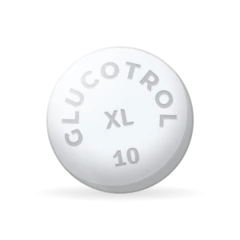
Glucotrol Xl
Type 2 Diabetes Mellitus
2.5mg · 5mg · 10mg
Indicated to address chronic blood glucose levels to support metabolic optimisation and manage diabetic complications.
Glipizide is a sulfonylurea medicine that lowers blood glucose in adults with type 2 diabetes. The US prescribing information for GLUCOTROL XL describes it as an adjunct to diet and exercise to improve glycaemic control, and states that it is not recommended for treating type 1 diabetes mellitus or diabetic ketoacidosis. The UK Summary of Product Characteristics for Minodiab likewise identifies glipizide as an oral blood glucose lowering drug of the sulfonylurea class.
Type 2 Diabetes Mellitus
2.5mg · 5mg · 10mg
Indicated to address chronic blood glucose levels to support metabolic optimisation and manage diabetic complications.
Glipizide primarily lowers blood glucose by stimulating insulin release from the pancreas, an effect that depends on functioning beta cells in the pancreatic islets. Sulfonylureas, including glipizide, bind to the sulfonylurea receptor on the pancreatic beta cell membrane, closing an ATP sensitive potassium channel and so triggering insulin release. The Summary of Product Characteristics for Minodiab adds that stimulation of insulin secretion by glipizide in response to a meal is of major importance, and that fasting insulin levels are not raised even with long term use, while the after meal insulin response continues to be enhanced after at least six months of treatment.
All sulfonylureas, including glipizide, are capable of producing severe hypoglycaemia, and combining glipizide with other antidiabetic medication can increase that risk. The Summary of Product Characteristics notes that hypoglycaemia can be harder to recognise in elderly patients and in those taking beta blocking drugs, and that it is more likely when calorie intake is low, after severe or prolonged exercise, when alcohol has been taken, or when more than one glucose lowering medicine is used.
Sulfonylureas including glipizide can cause haemolytic anaemia in people with glucose 6-phosphate dehydrogenase (G6PD) deficiency, and the US label advises avoiding glipizide in this group; the Summary of Product Characteristics adds that a non-sulfonylurea alternative should be considered for these patients. Postmarketing reports also describe haemolytic anaemia in some patients without known G6PD deficiency.
The label reports that oral hypoglycaemic drugs have been associated with increased cardiovascular mortality against treatment with diet alone or diet plus insulin, a warning based on the University Group Diabetes Program study, a long term trial in 823 patients with type 2 diabetes randomly assigned to one of four treatment groups.
Because the extended release tablet does not dissolve, the label reports obstructive symptoms in patients with known strictures who took another drug with this same non-dissolvable extended release formulation, and it advises avoiding glipizide in patients with pre-existing severe gastrointestinal narrowing, whether from disease or from an earlier procedure.
Glipizide is contraindicated together with miconazole under the Summary of Product Characteristics, and the US label advises close monitoring for hypoglycaemia when glipizide is combined with either miconazole or fluconazole, since fluconazole raises plasma concentrations of glipizide in a way that may lead to hypoglycaemia.
The Summary of Product Characteristics states that glipizide is contraindicated in pregnancy, while the US label notes that sulfonylureas including glipizide cross the placenta and have been associated with neonatal hypoglycaemia, and advises that glipizide should be discontinued at least two weeks before expected delivery.
Blood glucose control with glipizide can also be lost temporarily during physical stress such as fever, trauma, infection or surgery, and the Summary of Product Characteristics notes that the glucose lowering effect of oral hypoglycaemic drugs generally, including glipizide, can lessen in many patients over time as diabetes progresses or responsiveness to the drug diminishes.

28 Jul 2026 ⋅ 9 min read
Fasting changes when you take most medicines, not whether you need them. What to raise with your doctor before Ramadan, which medicines carry real risk during a fast, and why stopping a chronic medicine quietly is the dangerous option.
Read guide
28 Jul 2026 ⋅ 9 min read
Type 2 diabetes symptoms can be mild enough to go unnoticed for years, so it is often diagnosed after complications have already started. What to watch for, what the treatments do, and why more than half of people with diabetes take no medication for it.
Read guide