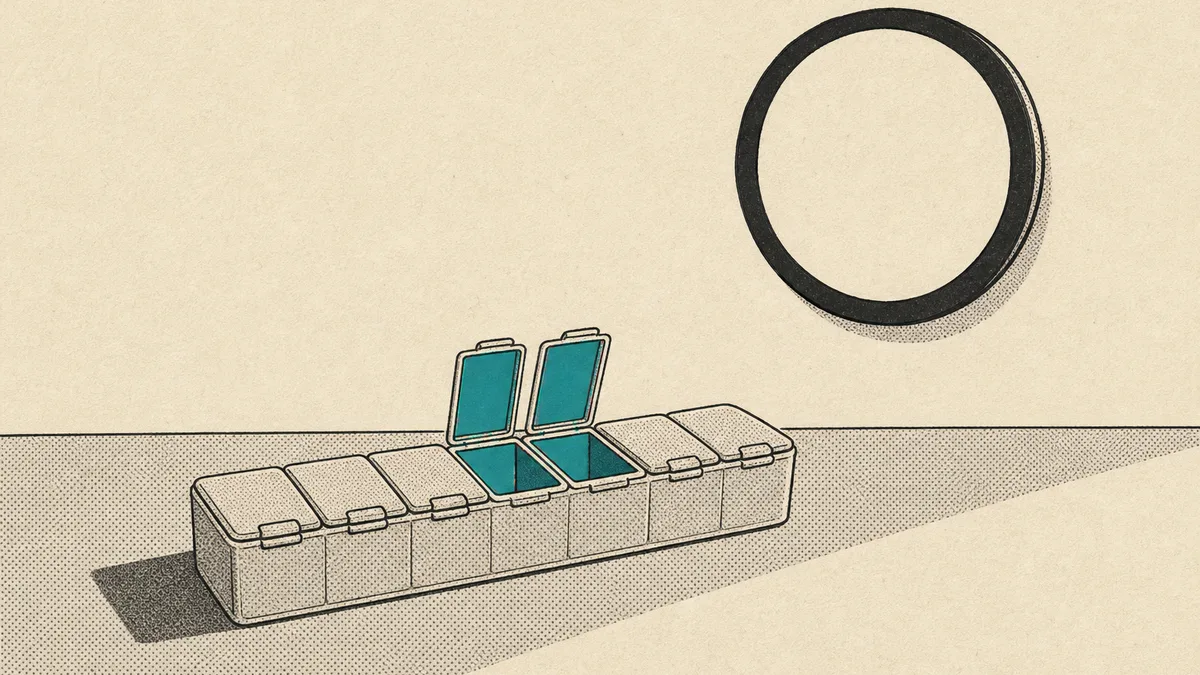
For most people, fasting changes when you take your medicines, not whether you still need them. Many once-daily and twice-daily medicines can be moved to suhoor and iftar without losing their effect. That is a decision for the clinician who prescribed them, and the time to make it is in the weeks before Ramadan, not on the second day.
The genuinely dangerous move is the quiet one: stopping a long-term medicine because taking it has become awkward, and telling nobody. Blood pressure, thyroid, epilepsy and anticoagulant medicines do not pause because the day has changed shape.
This article is about medicines. Whether to fast at all is a decision between you, your doctor and, if you wish, your Imam. Both Diabetes UK and the British Islamic Medical Association make the same point about that decision, and it is worth stating plainly at the start: illness and medical conditions are grounds for exemption.
Key takeaways
- Most medicines can be re-timed rather than stopped. Ask your prescriber which of yours can move to suhoor or iftar, and which genuinely cannot.
- Have the conversation before Ramadan begins. Diabetes UK’s guidance is that people with diabetes should only fast after discussing it with their team first, and that if control is not on track beforehand, fasting is not safe that year.
- Medical exemption from fasting exists. People who are ill or have certain health conditions are among those who can be exempt, alongside children, the elderly, travellers, and those who are pregnant, breastfeeding or menstruating.
- The highest-risk medicines are those that can cause low blood sugar, namely sulphonylureas and insulin.
- Checking your blood sugar does not break the fast, but you must break the fast if it goes too low or too high.
- Below 4 mmol/l you must break the fast and treat the hypo. Carry hypo treatment and water.
- Dehydration is the other main risk, and it is amplified by diuretics and by medicines that raise dehydration risk such as metformin.
- Missing your usual medication can push blood sugar up, which risks diabetic ketoacidosis, a condition needing hospital treatment.
Do I have to stop my medicine to fast?
Usually not. Most oral medicines can be moved to the hours when you are eating and drinking, and that is a change of schedule rather than a change of treatment.
A once-daily tablet taken in the morning can often be taken at suhoor instead, or at iftar, depending on what it does. A twice-daily medicine often maps naturally onto the two meals. Some medicines have a genuine reason for their timing, such as those taken with food, those that affect sleep, or those where the interval between doses matters. Those are the ones to ask about specifically.
What you should not do is work it out alone by moving doses around and seeing how you feel. Two medicines with identical dosing on the box can behave very differently across a fast, and the difference is not visible from the packet.
If you take several medicines, bring the whole list to the appointment rather than asking about one. The interactions between a re-timed diuretic, a blood-pressure tablet and a diabetes medicine are exactly the sort of thing that gets missed when each is considered separately.
What should I ask my doctor before Ramadan?
Whether fasting is safe for you at all this year, and then what your specific medicines need.
Diabetes UK’s guidance frames the first question as the important one. Before deciding to fast, check with your healthcare team how you are currently managing your condition, so you understand whether fasting is a risk, how to reduce it, or whether the risk is too high. Their wording on the second point is blunt: if your diabetes is not quite on track before the fast, it would not be a safe option to fast that year.
The factors that shape the risk are worth knowing before you go in:
- the type of diabetes you have
- whether your HbA1c is in a healthy range for you
- the type of medication you use
- whether you take medicines that can cause low blood sugar, specifically sulphonylureas and insulin
- whether you have complications such as poor vision, nerve damage, heart or kidney disease, which fasting can worsen
A useful thing to raise alongside those: what counts as a high blood sugar level for you, so you know the number at which you must break the fast and seek advice.
Which medicines carry the most risk during a fast?
Those that can drop blood sugar, and those that push you towards dehydration.
Medicines that can cause hypoglycaemia. Sulphonylureas such as glimepiride, gliclazide, glibenclamide and glipizide, and all insulins. These are the group Diabetes UK names specifically. If you take one, more frequent blood sugar testing during the fast is part of the plan, not an optional extra.
Insulin specifically. Two points from the guidance are easy to miss. You will not need as much insulin before the start of the fast, and the type may need changing from your usual one. Pre-mixed insulin is not recommended during fasting. That is a prescriber’s change, not a self-adjustment.
Diuretics. These cause fluid and electrolyte loss by design. Across a full day without water, that combination deserves a specific conversation, and reduced thirst sensation can make dehydration harder to notice.
Metformin. It may increase dehydration risk, and its early warning signs are difficult to recognise. Vomiting, diarrhoea or signs of dehydration during Ramadan are a reason to seek advice rather than to push on.
Anything with a narrow margin. Anticoagulants such as warfarin, thyroid replacement, anticonvulsants and immunosuppressants are less about the fast itself and more about consistency. Erratic timing is the risk.
What actually happens to blood sugar during a fast?
It can fall too low, and it can also climb too high, and the second one surprises people.
Low blood sugar is the expected risk. If you take certain tablets or insulin, fasting carries a risk of hypoglycaemia, so knowing the signs and testing more often matters. If your blood sugar drops below 4 mmol/l you must break the fast and treat the hypo with something sugary followed by something starchy. Carrying hypo treatment and a bottle of water through the fasting hours is a practical precaution.
High blood sugar is the less obvious one. It can develop if you miss your usual prescribed medication, if portions of starchy or sugary food at iftar are larger than usual, or if you are less active than normal. High blood sugar increases dehydration risk, which brings dizziness and tiredness. Left without advice it can lead to diabetic ketoacidosis, which needs hospital treatment.
Two reassurances worth having in writing before Ramadan starts: checking your blood sugar does not break the fast, and if you cannot reach your doctor or diabetes team and are unsure what to do with your medication, the advice is not to fast.
Does the time of year change how hard fasting is?
Yes, and it is currently moving in a helpful direction.
Ramadan follows the lunar calendar, so it moves roughly eleven days earlier each year against the Gregorian one. Ramadan 2026 ran from on or around 17 February. That means recent and upcoming Ramadans in the UAE fall in the cooler part of the year, with shorter daylight hours than the summer fasts of the mid-2010s.
This matters practically. The dehydration risk that dominated advice written for a July Ramadan is lower during a February one. It is not absent, and for anyone on diuretics or with kidney problems it still deserves planning, but the conditions are more forgiving than a lot of older advice assumes.
If you are reading older guidance about coping with a fast in extreme heat, check what year it was written for.
What about eating and drinking around the fast?
Do not skip suhoor, and choose slowly absorbed foods.
Diabetes UK’s advice is that the pre-dawn suhoor meal is important and should not be skipped. High-fibre starchy foods such as high-fibre cereals or oats, buckwheat, bulgur wheat, or brown or wild rice are absorbed more slowly and have a low glycaemic index, which helps keep blood sugar in range through the day. Portion sizes of carbohydrate foods are worth watching.
The other half is fluid. The hours between iftar and suhoor are when hydration has to be replaced, and for anyone on a diuretic that is not a small detail.
Do and don’t
Do:
- Book a medication review a few weeks before Ramadan, not during it.
- Bring your full medicine list, not just the one you are worried about.
- Ask which medicines can move to suhoor or iftar and which cannot.
- Test blood sugar more often if you take insulin or a sulphonylurea.
- Carry hypo treatment and water during fasting hours.
- Break the fast if your blood sugar goes below 4 mmol/l or above the level your team has given you.
- Keep suhoor, and choose slowly absorbed carbohydrates.
Don’t:
- Don’t stop a chronic medicine because taking it has become inconvenient.
- Don’t adjust insulin doses or types yourself.
- Don’t assume a medicine is safe to re-time because another one was.
- Don’t fast if you cannot reach your doctor and are unsure about your medication.
- Don’t ignore dizziness, confusion or unusual thirst.
- Don’t treat older summer-Ramadan advice as current.
Frequently asked questions
Does taking a tablet break the fast? That is a religious question rather than a medical one, and rulings differ by route of administration. An Imam is the right person to ask. What the medical guidance does say clearly is that checking your blood sugar does not break the fast.
I feel fine. Do I still need to see someone first? Yes, and feeling fine is not the test. The assessment is about your control, your medicines and any complications, which is why it relies on your results rather than on symptoms. Someone whose diabetes is well controlled on a medicine with no hypo risk is in a very different position from someone on insulin.
What if I am advised not to fast? Medical exemption exists precisely for this. Diabetes UK suggests speaking to an Imam about the alternatives to fasting where you have been advised against it on health grounds.
Where to go next
If you are checking what one of your medicines actually does before that appointment, the ingredients index lists each active ingredient and the brands it is sold under. The categories most affected are diabetes and heart and blood pressure.
Fasting is not the only seasonal pressure on medicines here. How you store them matters too, which we cover in storing medicine in a Gulf summer.
MedicForce option: our catalogue lists medicines by active ingredient, which is the form your prescriber will use when discussing a change of timing or type.
Useful links
- Diabetes and Ramadan, Diabetes UK the fullest patient-facing guidance available, developed with the British Islamic Medical Association, covering risk assessment, planning, blood sugar testing during the fast and food choices. Also available in Arabic and Urdu.
- Type 2 diabetes, NHS background on the condition and its treatment.
- Diabetes, WHO Eastern Mediterranean Regional Office regional context for diabetes across the Eastern Mediterranean.