Key takeaways
- Check your blood pressure even when you feel well. WHO estimates that 600 million adults with hypertension, 44%, do not know they have it; about 23% have it controlled. WHO
- WHO defines hypertension as 140/90 mmHg or higher on two different days. For home readings, the NHS uses a separate threshold of 135/85. Take the readings to a clinician for interpretation. WHO, NHS
- A reading around 180/120 mmHg with symptoms needs immediate care. Severe headache, chest pain, vision changes and an abnormal heart rhythm are among WHO’s warning signs. WHO
- Diuretics need attention during hot weather. Fluid loss, electrolyte imbalance and reduced thirst can contribute to dehydration. SPS
- Report dizziness on standing, faintness or reduced urine output. SPS gives specific advice for ACE inhibitors, ARBs, beta blockers and calcium-channel blockers as well as diuretics. SPS
- Keep taking prescribed medicines and arrange a review. Heat alone is not a reason for routine stopping; feeling well is not evidence that treatment is unnecessary. SPS, WHO
- Air pollution contributes to long-term risk. WHO identifies it as the most significant environmental risk factor for hypertension and associated diseases. WHO
A tablet you have taken comfortably all winter can leave you dizzy in August. Heat and reduced fluid intake affect some blood pressure medicines, particularly diuretics. Meanwhile, the high blood pressure itself usually causes no symptoms. The measurement and the symptoms after treatment both belong in your review.
What do the numbers actually mean?
WHO describes hypertension as readings of 140/90 mmHg or above on two separate days. The NHS distinguishes home readings from clinic readings.
The first, systolic, number is the pressure in your blood vessels when the heart contracts. The second, diastolic, is the pressure when the heart rests between beats. WHO’s definition is specific about the repetition: hypertension is diagnosed if, measured on two different days, systolic readings on both days are 140 mmHg or higher, and/or diastolic readings on both days are 90 mmHg or higher.
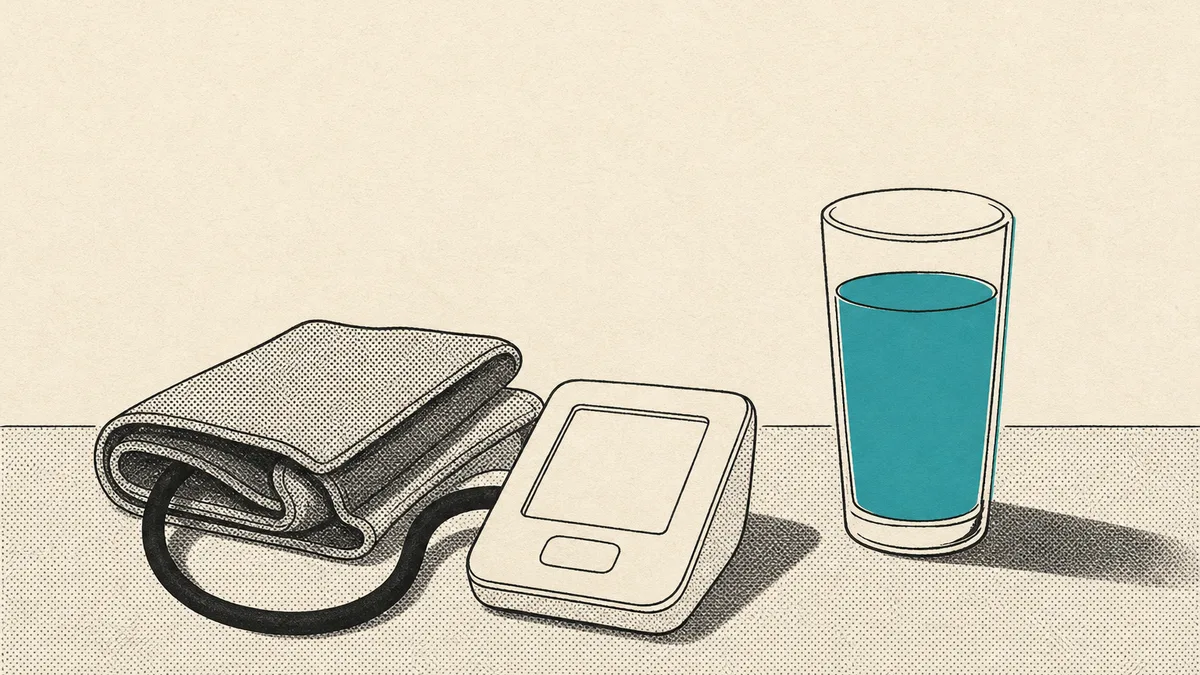
A high clinic reading after rushing through traffic needs repeating. Stress, rushing and a badly fitted cuff can produce one-off spikes. The NHS describes several ways to confirm a result: regular home readings over the next few days, a return appointment, or a portable monitor that measures over 24 hours. NHS
For interpretation, the NHS uses 140/90 or higher when checked by a healthcare professional and 135/85 or higher at home. Keep a series of home readings for the appointment. Automated monitors are widely sold, but WHO still recommends a health professional’s assessment of overall risk and associated conditions. NHS, WHO
Why does it matter if I feel completely fine?
Because feeling fine is the normal experience of high blood pressure, right up until the damage shows.
This is the single most important thing to understand about the condition. Most people with hypertension do not feel any symptoms. The pressure is doing its work on the arteries, kidneys, heart and brain regardless of how you feel, and if it is not treated it can cause kidney disease, heart disease and stroke.
WHO puts the global total at 1.4 billion adults aged 30 to 79 in 2024. Around 600 million, roughly 44%, did not know they had hypertension, and about 23% had it controlled. Its regional comparison puts prevalence at 38% in the Eastern Mediterranean and 29% in the Western Pacific. These are regional figures, not a measurement of UAE residents alone. WHO
The same logic explains why people stop their medication and why that is a mistake. The tablet is what is keeping the number down. Feeling well on treatment is the treatment working, not a sign it is no longer needed.
When is a blood pressure reading an emergency?
When it reaches roughly 180/120 mmHg or higher and you have symptoms with it. Seek care immediately, do not wait for an appointment.
The symptoms WHO lists at that level include:
- severe headaches
- chest pain
- vision changes
- abnormal heart rhythm
Very high blood pressure can also cause blurred vision and other symptoms below that threshold. The rule of thumb is that hypertension is a condition you manage over months, except when it is not, and the combination of a very high reading with any of those symptoms is the exception.
How does the heat affect my blood pressure medication?
Mostly through fluid balance, and diuretics are the clearest case.
Diuretics such as indapamide, hydrochlorothiazide and furosemide work by increasing fluid and salt loss. That is the mechanism, not a side effect. Add a climate where you lose more fluid through sweat and may drink less than you think, and the same dose can tip into dehydration and electrolyte imbalance. NHS Specialist Pharmacy Service guidance notes that reduced thirst sensation can increase the dehydration risk further, which is why it is easy to miss.
Report dizziness on standing, unusual tiredness, cramps, confusion or much less urine than normal. SPS advises reviewing dizziness, postural symptoms and reduced urine output with ACE inhibitors and ARBs. For beta blockers it advises rising slowly from sitting or lying down; for calcium-channel blockers, maintaining hydration and seeking review for postural symptoms or dehydration. SPS
Other blood pressure medicines are less directly affected than diuretics, but dehydration lowers blood volume. A winter prescription may produce more of a drop in August. A prescriber may need to change it; report the symptoms and mention the season instead of adjusting it yourself.
There is a storage dimension too. Most medicines are licensed for storage below 25°C, and that is easily exceeded here, which we cover in storing medicine in a Gulf summer.
Does dust and air pollution really affect blood pressure?
WHO names air pollution as the most significant environmental risk factor for hypertension and associated diseases.
That is a notable statement for this region. Sand and dust storms raise particulate matter concentrations, and WHO describes them as a growing public health concern mainly for respiratory and cardiovascular diseases. The cardiovascular half of that sentence is easy to skip over.
It does not mean a dust episode will spike your reading in a way you can feel. It means the environmental exposure is part of the long-run risk picture alongside diet, weight, activity, alcohol and tobacco, and it is one more reason to keep the modifiable risks in hand. We cover the respiratory side in allergy in the UAE.
What can I change without medication?
Diet, salt, weight, activity, alcohol and tobacco, and for some people that is enough on its own.
WHO’s modifiable risk factors are unhealthy diet, especially excessive salt, along with saturated and trans fats and low fruit and vegetable intake, physical inactivity, tobacco and alcohol, and being overweight or obese. Lifestyle change can lower blood pressure, though some people will still need medicine.
Salt deserves the most attention here, because it is the easiest to underestimate. Most dietary salt is not what you add at the table; it is already in bread, restaurant food, processed meat, sauces and snacks.
The non-modifiable factors are worth knowing so you can judge your own risk: family history, age over 65, and co-existing conditions such as diabetes or kidney disease. If several apply to you, that is an argument for checking your blood pressure regularly rather than for fatalism.
What about Ramadan?
Fasting changes when you can take a blood pressure tablet, and for diuretics it also changes the fluid picture. Both are worth planning before Ramadan starts.
Most blood pressure medicines can be re-timed to suhoor or iftar, but that is a prescriber’s decision, and the interaction between a re-timed diuretic and a full day without fluid is exactly the sort of thing to raise in advance rather than discover. We cover this in Ramadan and your medication.
Do and don’t
Do:
- Get your blood pressure measured even if you feel completely well.
- Arrange repeat readings: WHO describes confirmation on two days; the NHS also describes a portable 24-hour monitor.
- Report dizziness, cramps or unusual tiredness in hot weather.
- Keep fluid intake up, particularly with a diuretic; follow your clinical fluid limit if one has been prescribed. SPS
- Mention the season and any planned fasting at your medication review.
- Seek care immediately for a very high reading with symptoms.
Don’t:
- Don’t stop a blood pressure medicine because you feel fine.
- Don’t adjust a diuretic dose yourself in summer.
- Don’t rely on a single reading, high or low.
- Don’t assume no symptoms means no problem.
- Don’t use a home monitor as a replacement for clinical assessment. Bring the series of readings; the NHS home threshold is 135/85.
Where can I check the ingredient in a familiar brand?
Use the ingredient index to match brands prescribed in another country.
The heart and blood pressure category lists what is stocked here, our largest category. The hypertension page approaches it from the diagnosis, and the ingredients index maps each active ingredient to the brands containing it, which is useful if you are matching a medicine you started in another country.
MedicForce option: our catalogue lists blood pressure medicines by active ingredient, so you can identify the equivalent of a brand prescribed elsewhere.
Useful links
- Hypertension, WHO the diagnostic threshold, the symptomless nature of the condition, the global awareness and control figures, risk factors including air pollution, and the emergency symptoms.
- High blood pressure (hypertension), NHS patient-facing detail on measurement, treatment and lifestyle change.
- Heatwaves and medicines, NHS Specialist Pharmacy Service on diuretics, dehydration and heat-related medication risk.